Customer portals
Secure areas where clients log in to see orders, documents, invoices and support requests in one place.
100+ projects delivered and supported
We build portals, dashboards, marketplaces, SaaS products and APIs for companies that have outgrown spreadsheets and off-the-shelf tools. Each project starts with screen designs, a written scope and a fixed quote with a target date.
Under web app development, these are the parts clients ask for most. A project can use one of them or all.
Secure areas where clients log in to see orders, documents, invoices and support requests in one place.
Internal tools that pull data from your systems into tables, charts and reports your team uses every day.
Platforms connecting buyers and sellers, with listings, wallets, automatic delivery, commissions and dispute handling built in.
Subscription software with sign-up, plans, billing, team accounts and roles, ready to grow from the first paying users.
REST APIs for your partners and connections to payment providers, CRMs, accounting tools and other third-party services.
Background jobs, scheduled tasks and n8n flows that move data between tools and remove repetitive manual work.
Four steps, with a working test version after each part.
We map the users, roles, data and existing tools involved, then identify the smallest version that solves the main problem.
You get screen designs, user flows, a data model outline and a written scope with a fixed price and date.
Features are delivered module by module on a staging server, where you test real workflows with sample data before sign-off.
We deploy to your server or cloud, set up backups and monitoring, write API docs and hand over all access.
From 100+ delivered projects
Products of this kind that we built and still support. Each box opens the live site.
Guide
Off-the-shelf software works until your process stops fitting it. Warning signs include staff copying data between tools by hand, spreadsheets that break when two people edit them, or paying for several subscriptions that each solve a slice of the problem. Custom web application development makes sense when the workflow is specific to your business and the cost of the workaround keeps growing month after month.
Before committing, check whether a configured SaaS tool or an automation between existing apps would solve the issue. Sometimes a few n8n flows or a small internal dashboard is enough. When the software itself becomes the product, such as a marketplace or a subscription platform, building your own gives you control over features, data, pricing and the customer experience in a way rented tools rarely allow.
Define the one action that proves people want the product. For a marketplace, that might be a buyer paying and receiving an item without manual help. For a SaaS tool, it could be a user completing the core task and coming back the next week. Build that path fully, including payments and email notifications, and leave nice-to-have features such as advanced reports for later releases.
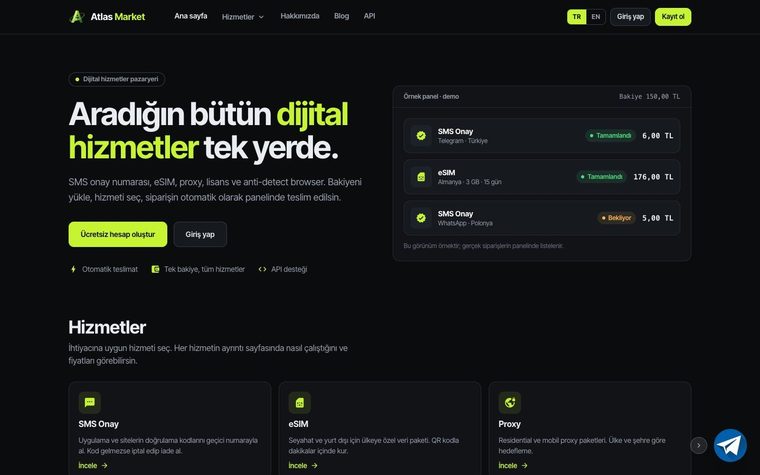
Plan the data model early, since changing it later touches every screen. Decide who the user roles are, what each role can see and which records need an audit trail. Atlas Market, our own marketplace for verification numbers, eSIM and proxies, runs on a wallet, automatic delivery and a public API. Pieces like these work best when they are designed together, because they all depend on the same order records.
Building the app is only part of the budget. Plan for hosting, a managed database, backups, email delivery, error monitoring and any paid APIs the product calls. Small internal tools often run on a single modest server, while a public SaaS product may need separate staging and production environments. Ask your development team for a hosting estimate alongside the build quote so you see the full picture.
Maintenance matters as well. Frameworks and libraries release security updates, browsers change, and users ask for improvements once they rely on the app daily. A monthly care plan covers updates, monitoring and small fixes, while larger features are quoted separately. Make sure the code lives in a repository you own and that deployment steps are documented, so any developer can pick up the work later.
It depends on the number of user roles, screens, integrations and the complexity of the business rules. After the discovery call you get a written scope and a fixed quote, which stays the same unless the scope changes.
A focused internal dashboard is quicker to build than a marketplace with wallets, payouts and an API. The quote includes a target date, and modules arrive on a staging server so you can track progress as you go.
Usually, yes. We integrate with tools that offer an API or data export, such as payment providers, CRMs, accounting software and spreadsheets, and we confirm each integration during scoping before quoting.
You do. After the final payment we transfer the repository, database, server access and third-party accounts to you. Your data stays in infrastructure you control, and API documentation is included.
Yes. Optional monthly care covers security updates, monitoring, backups and small fixes. New features are scoped and quoted separately, so you always know what each change will cost before work begins.
Guides from our blog on this kind of project.
How to build an MVP app step by step: define one core problem, cut scope hard, choose what to leave out, launch to real users and learn before you spend more.
Web developmentThe difference between a website, a web app and a mobile app, and how to pick the right one for your business, your customers and your budget.
AutomationOrder alerts, invoices, lead follow-ups, reports and data copying: five everyday tasks small businesses can automate with bots, scheduled jobs and APIs.
Send a short brief and get a written, fixed quote. We reply in English, Turkish, Russian or French.