Shopify stores
Theme setup or custom themes, product imports, apps and checkout settings for brands that want a hosted platform.
100+ projects delivered and supported
We build online stores on Shopify, WooCommerce or custom code for brands, retailers and digital product sellers. You get store designs, a written scope and a fixed quote with a target launch date first.
Under ecommerce development, these are the parts clients ask for most. A project can use one of them or all.
Theme setup or custom themes, product imports, apps and checkout settings for brands that want a hosted platform.
WordPress-based shops with full control over hosting, plugins and content, suited to stores that also publish articles.
Stores built from scratch when your catalog, pricing rules or checkout flow do not fit standard platforms.
Card payments, local payment methods, taxes and shipping rates configured for the countries where you sell.
Customer balances, top-ups and automatic delivery of codes, licences or files right after a successful payment.
Product variants, stock tracking, order statuses, customer emails and an admin panel your team can run daily.
Four steps, with a working test version after each part.
We review your products, order volume and payment needs, then recommend Shopify, WooCommerce or a custom build with clear reasons.
You see designs for the home, category, product and checkout pages, plus a written scope with a fixed price.
We build the store on a test link and run sample orders through payments, emails and stock updates with you.
The store goes live on your domain with analytics, conversion tracking and Search Console set up, plus optional monthly care.
From 100+ delivered projects
Products of this kind that we built and still support. Each box opens the live site.
Guide
Shopify suits most new stores that sell physical products. Hosting, security and checkout are handled for you, and the app store covers reviews, subscriptions and shipping labels. The trade-off is a monthly plan, transaction fees on some payment setups and limits on how far you can change checkout. For a standard catalog and a team that wants to focus on selling, it is often the fastest route to launch.
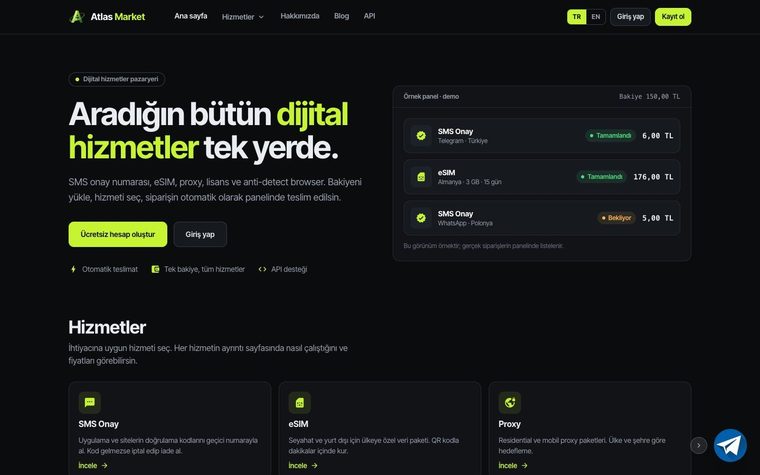
WooCommerce gives more control because it runs on your own WordPress hosting, which helps when the store sits beside a large blog. Custom ecommerce website development fits businesses with unusual pricing, digital goods, wallets, marketplaces or heavy integrations. Atlas Market, our own store for SMS numbers, eSIM and proxies, needed a balance system and instant delivery that standard platforms could not offer without extensive workarounds.
Start with product pages that answer buyer questions: clear photos, price, variants, stock status, delivery time and return policy. Keep checkout short, allow guest purchases and show shipping costs before the final step, since surprise fees are a common reason carts are abandoned. Test the whole flow on a phone, including payment confirmation emails, because many shoppers browse and buy on mobile devices.
Behind the scenes, set up taxes for each region, connect a payment provider that supports your customers' preferred methods and decide how orders reach your warehouse or fulfillment partner. Add analytics with purchase events so you can see which products and traffic sources bring revenue. Legal pages such as terms, privacy and refund policies should be in place before the first real order arrives.
Ecommerce SEO depends on structure. Each category and product needs a unique title, a written description and a clean URL. Copying manufacturer text onto hundreds of products creates duplicate content, so rewrite descriptions for your best sellers first. Add product schema so search engines can display price and availability, and keep filters from generating thousands of thin pages that waste crawl budget.
Speed and trust signals matter too. Compress product images, limit heavy apps and scripts, and make sure the store passes Core Web Vitals on mobile. Buying guides, size charts and comparison pages give shoppers useful answers and give search engines more to index. Rankings take time and are never guaranteed, yet a well-built store gives your marketing a sound technical base to grow on.
It depends on the platform, number of products, payment methods, integrations and custom features such as wallets or digital delivery. We send a written scope and a fixed quote after the first call, before any work begins.
A Shopify store with a standard catalog launches sooner than a custom store with wallets and an API. The quote includes a target date, and you test the store on a private link as each part is finished.
Yes. We can move products, customers and order history from platforms such as Shopify, WooCommerce or a custom system, set up redirects from old URLs and check that nothing is lost in the move.
We work with major card processors and many regional payment methods. During scoping we confirm which providers are available in your country and support your currency, then configure and test them before launch.
You do. After the final payment you receive the code, admin accounts, hosting or platform access and all product and customer data. Optional monthly care covers updates, backups and small changes.
Guides from our blog on this kind of project.
An ecommerce website checklist for business owners: products, photos, payments, shipping, taxes, legal pages and choosing Shopify, WooCommerce or custom.
Web developmentHow much does a website cost? Typical ranges for small business sites, what drives the price, hidden yearly costs, and how to get a fixed quote you can trust.
SEOAn SEO checklist for a new website: indexing, page titles, speed, mobile, sitemap, Google Search Console, hreflang for multilingual sites and useful content.
Send a short brief and get a written, fixed quote. We reply in English, Turkish, Russian or French.